Flat Roofs Built to Handle Snowmelt
Flat/TPO Roofing in Eagle for commercial buildings and homes where drainage slope prevents pooling and seam failure
Flat roofs on commercial properties in Eagle and Meridian trap snowmelt and debris when drainage slopes fail or seams separate over time. Cornerstone Roofing repairs and replaces flat roofs using TPO membrane systems, verifying drainage design and heat-welding every seam to stop leaks before they migrate under the membrane. You'll see positive drainage that moves water off the roof deck during spring runoff, and seams that remain watertight through seasonal temperature swings common in mountain climates.
TPO membrane systems resist UV degradation and accommodate the freeze-thaw cycles that split lesser materials, while heat-welded seams create permanent bonds stronger than the membrane itself. Cornerstone inspects substrate condition, verifies slope toward drains, and preps the deck surface before membrane placement to prevent future separation. Flat roofs in this region require positive drainage because snowmelt volume exceeds what gravity alone can clear on zero-slope surfaces.
Schedule a flat-roof inspection to verify drainage slope and seam integrity before the next storm season.
What Proper Flat Roofing Requires
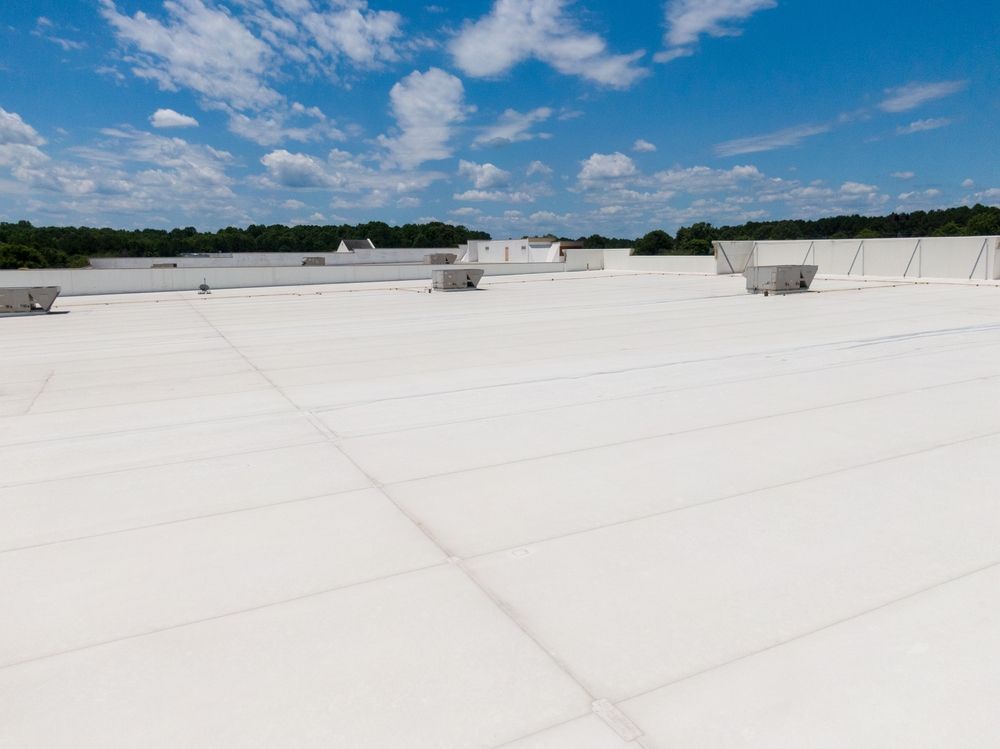
Flat-roof replacement begins with substrate prep—removing old membrane, inspecting deck boards for rot or deflection, and confirming that drain openings sit at the lowest point of each roof section. Heat-welded seam placement follows membrane rollout, with overlap widths that accommodate thermal expansion and contraction across Idaho's temperature range. Every seam receives a hot-air weld that fuses the TPO layers into a single waterproof sheet, eliminating the peel-and-stick failures common in cheaper systems.
Once installation finishes, you'll notice water moving toward drains during rainstorms instead of pooling in low spots, and seams that lie flat without bubbling or lifting at edges. Properly welded TPO seams remain intact through hail impacts that would separate adhesive-bonded systems, and the white membrane surface reflects summer heat to reduce cooling loads inside commercial buildings.
Flat-roof inspection includes drainage slope verification using levels and water tests, plus seam integrity checks that catch early separation before leaks develop. Cornerstone documents findings for insurance submissions when storm damage creates seam tears or membrane punctures, and coordinates repairs to minimize business interruption during seasonal work.
What Property Owners Usually Ask
Flat and TPO roofing questions often focus on drainage performance, seam longevity, and how Idaho's climate affects membrane systems.
What makes TPO membrane better than other flat-roof materials?
TPO resists UV breakdown and remains flexible through freeze-thaw cycles, while heat-welded seams eliminate the adhesive failures that cause leaks in EPDM or modified-bitumen systems.
How does drainage slope get verified on an existing flat roof?
Cornerstone uses levels and water tests to identify low spots where pooling occurs, then adjusts substrate or adds tapered insulation during replacement to direct runoff toward drains.
Why do flat roofs in Eagle require positive drainage design?
Snowmelt volume during spring runoff exceeds what zero-slope roofs can clear, so drainage slopes must direct water toward scuppers or internal drains to prevent standing water that degrades membranes.
How long do heat-welded TPO seams last compared to glued seams?
Heat-welded seams fuse membrane layers into a single sheet and typically outlast the membrane itself, while adhesive-bonded seams separate under thermal stress within five to ten years.
What happens during a flat-roof inspection?
Inspection includes walking the roof to check for ponding areas, testing seam bonds by hand, inspecting drain openings for debris, and documenting any membrane punctures or separation for insurance claims.
Cornerstone Roofing operates from a garage in the Carlton area and provides direct communication throughout flat-roof projects, with owner oversight on every seam-welding job. Arrange an on-site evaluation to assess drainage slope and seam condition before scheduling replacement work.